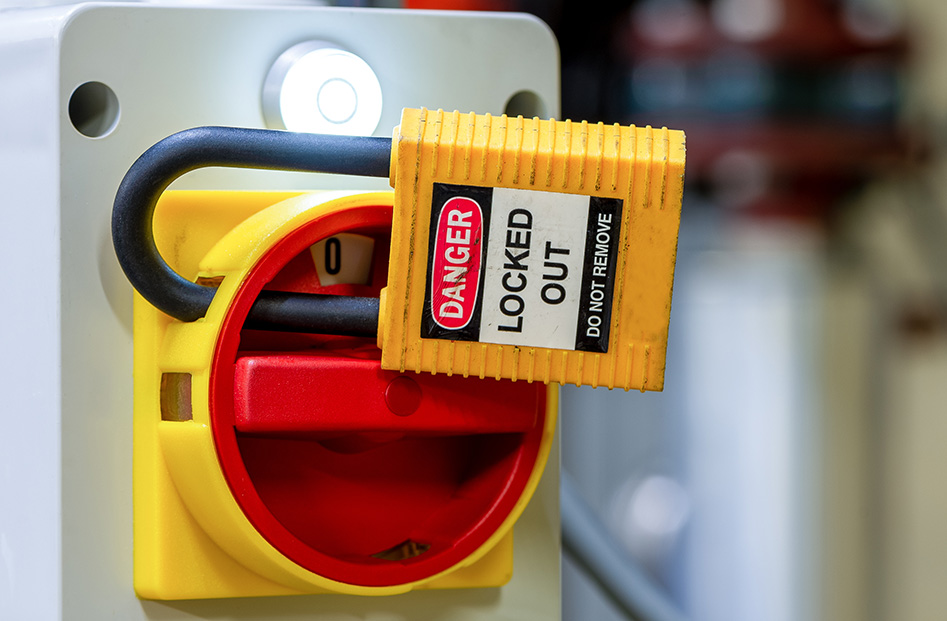
When machinery shuts down for maintenance, the risk doesn’t disappear—it shifts. A silent, potentially deadly hazard emerges: unexpected energization. That’s where lockout tagout (LOTO) procedures come in. But even the most rigorous LOTO plan fails if the tags don’t deliver. Lockout tagout tags must have specific features to communicate danger, assign responsibility, and deter premature re-energization. These aren’t optional extras—they are non-negotiable components of a compliant and effective safety system.
Why LOTO Tags Are More Than Just Paper
A LOTO tag isn’t just a piece of plastic or cardstock. It’s a legal and operational safeguard. OSHA standard 29 CFR 1910.147 requires that tags used in energy control procedures must “clearly indicate” that equipment is not to be operated until the tag is removed. But clarity isn’t achieved by a generic “Do Not Operate” stamp. Real-world incidents show that vague or poorly designed tags are routinely ignored—especially under production pressure.
Consider a 2022 incident at a Midwest packaging plant. A maintenance technician locked out a conveyor system, but used a handwritten tag with no ID, no time stamp, and no hazard description. A floor supervisor, unaware of the ongoing repair, removed the lock and restarted the line. The result: a severe arm injury. Investigation revealed the tag failed three core requirements—it wasn’t durable, wasn’t specific, and didn’t identify the authorized employee.
This is why lockout tagout tags must have standardized, enforceable features. They’re not just warnings—they’re legal documents in the moment of crisis.
Mandatory Features Every LOTO Tag Must Have
OSHA doesn’t leave room for interpretation. Tags must meet strict criteria to be effective. Below are the non-negotiable elements every compliant LOTO tag must include:
#### 1. Clear Prohibition Statement The tag must prominently display a message like “Do Not Start,” “Do Not Operate,” or “Do Not Energize.” This isn’t the place for creativity—use standardized, high-contrast text. Red and white or orange and black combinations are proven to grab attention.
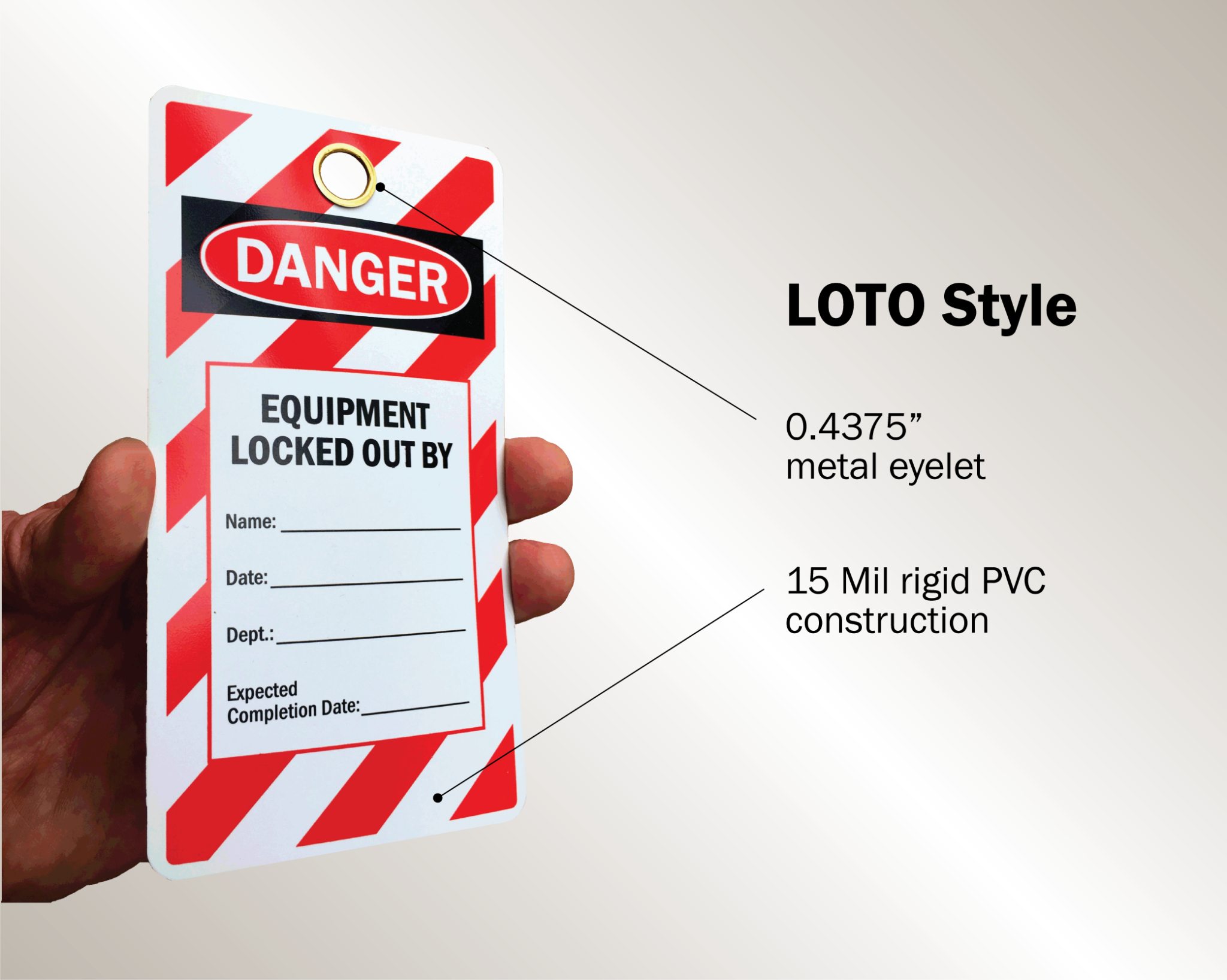
#### 2. Authorized Employee Identification Who applied the lock? This is critical. The tag must include space for the worker’s printed name, signature, and employee ID. If an accident occurs, this information is vital for investigation and accountability.
#### 3. Date and Time of Application LOTO durations vary. Some repairs take minutes; others stretch into shifts. Including the start time prevents confusion about how long equipment has been down. It also helps supervisors verify if a tag is stale or still active.
#### 4. Equipment Identification Vague references like “this machine” are useless. The tag must specify the exact equipment—by name, ID number, or location. Example: “Conveyor Line C-7, Pump Motor #4.” This prevents misapplication, especially in facilities with redundant systems.
#### 5. Hazard Description What energy sources are being controlled? List them: electrical, hydraulic, pneumatic, thermal, chemical. A tag on a boiler repair should note “High-Pressure Steam and 480V Electrical Isolation.” This informs others of the risks involved.
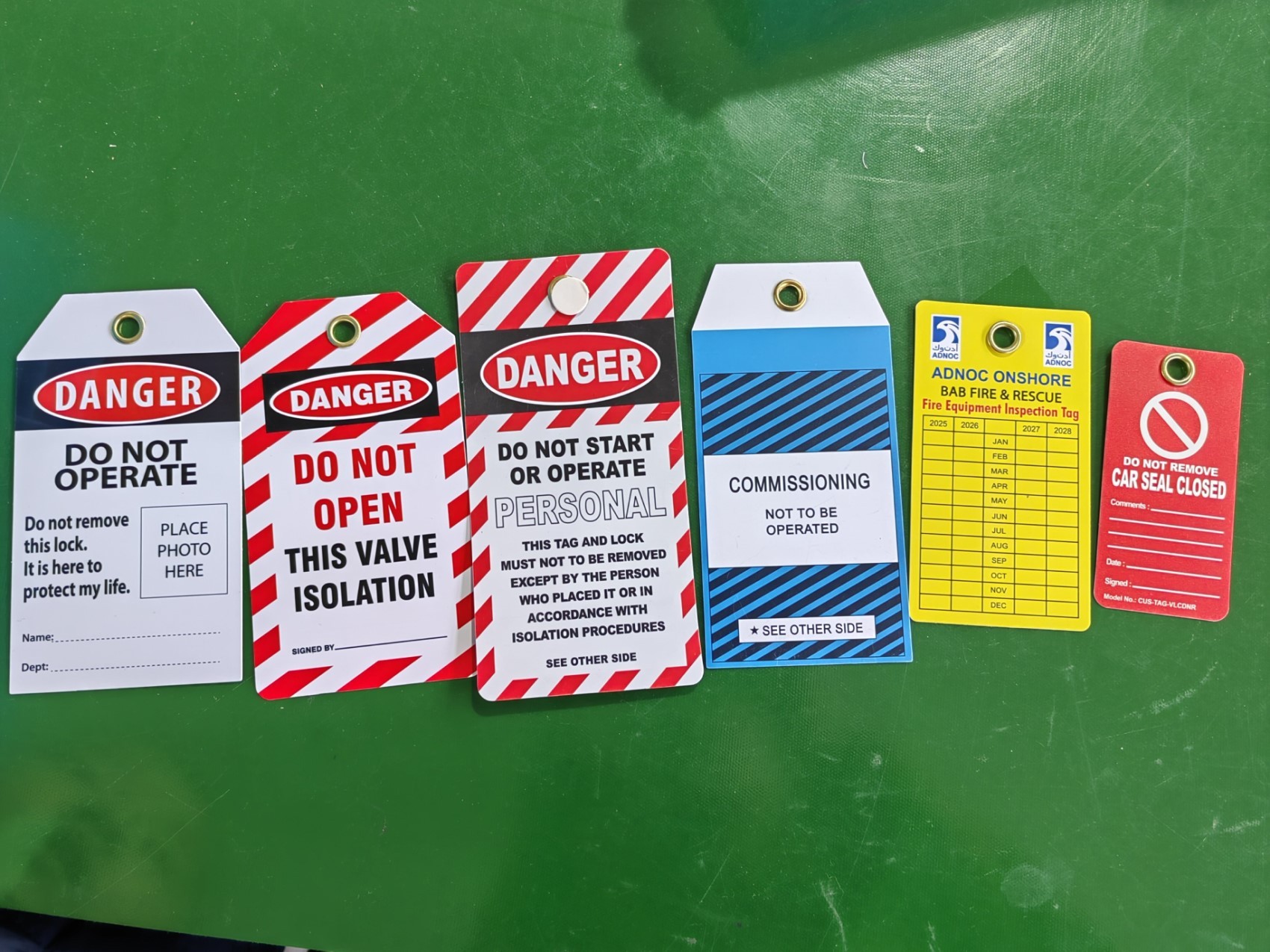
#### 6. Durable, Weather-Resistant Material Paper tags disintegrate with moisture, grease, or handling. LOTO tags must be made of durable materials—polypropylene, vinyl, or laminated cardstock—that resist tearing, fading, and environmental exposure. In outdoor or washdown environments, this is non-negotiable.
#### 7. Standardized Design and Language Consistency prevents confusion. Every tag in a facility should follow the same layout, color scheme, and terminology. Multilingual facilities must include translations—OSHA permits this as long as the primary message is clear.
Common Mistakes That Undermine LOTO Tag Effectiveness
Even with compliant templates, real-world misuse weakens the system. Here are frequent errors that compromise safety:
- Handwritten tags with poor legibility – Smudged ink or sloppy writing defeats the purpose. Use pre-printed fields or digital tag generators.
- Missing signatures or IDs – Tags without accountability are easily dismissed. Never allow anonymous tagging.
- Reusing tags – Once removed, a tag should be retired. Reuse creates confusion about current status.
- Using tags without locks – Tags alone don’t isolate energy. They must accompany a physical lock. OSHA allows tag-only use only in rare cases where locks aren’t feasible—and even then, additional safety measures are required.
- Poor placement – Tags must be attached at the lockout point, not left on a clipboard or console. If the tag isn’t visible at the energy-isolating device, it’s ineffective.
A 2021 OSHA audit of 37 manufacturing sites found that 68% had at least one instance of non-compliant tagging. The most common deficiency? Missing employee identification.
Best Practices for Implementing Effective LOTO Tags
Having the right tag is only half the battle. Implementation matters just as much.
#### Train Workers on Tag Significance Employees must understand that a LOTO tag isn’t a suggestion—it’s a legal barrier. Training should cover: - How to properly fill out every field - Why skipping details is dangerous - What to do if they encounter a tag they don’t recognize
#### Use Multi-Language Tags Where Needed In diverse workplaces, a tag in English only isn’t sufficient. Use bilingual or trilingual tags (e.g., English/Spanish/Vietnamese) to ensure universal understanding.
#### Audit Tag Usage Regularly Conduct monthly spot checks. Are tags fully completed? Are they placed correctly? Are expired tags being removed? Use audits to reinforce discipline.
- #### Integrate Tags Into Broader LOTO Procedures Tags should be part of a documented workflow:
- Shut down equipment using established procedures
- Isolate all energy sources
- Apply lock and tag simultaneously
- Verify isolation (test run)
- Perform maintenance
- Remove lock and tag only by the authorized employee
Top 5 LOTO Tag Solutions Used by Industry Leaders
Not all tags are created equal. The following products are widely trusted for durability, compliance, and usability:
| Product | Material | Key Features | Best For |
|---|---|---|---|
| **Brady BP3900 LOTO Tag | Heavy-duty polypropylene | Pre-printed fields, UV-resistant, hole for padlock | High-volume industrial sites |
| **Grainger 4ZCD3 | Laminated cardstock | Write-on areas, bilingual (EN/ES), weather-resistant | Mid-size facilities with Spanish-speaking teams |
| **Seton 20610-1 | Vinyl | Reflective surface, tamper-resistant, 5-part form | Outdoor or low-light environments |
| **Master Lock 1490MINI | Polypropylene | Mini design for tight spaces, bold red/white contrast | Compact machinery, control panels |
| **DEWALT DWMT78150 | Polyester | Industrial-strength, chemical-resistant, customizable | Harsh environments (chemical, oil & gas) |
These aren’t just tags—they’re engineered safety tools. Choosing the right one depends on your environment, workforce, and equipment complexity.
Real-World Use Cases: When Tags Prevented Disasters
The value of compliant LOTO tags becomes clear in incident reports.
Case 1: Automotive Assembly Plant, Ohio A robotic arm required welding repair. The technician used a Brady tag with full details: name, time, equipment ID, and “Hydraulic & Electrical Isolation.” Two hours later, a supervisor nearly restarted the line—but stopped when he saw the tag and called the technician. The repair was still underway. The tag’s clarity prevented a potential crush injury.
Case 2: Water Treatment Facility, Texas During a routine valve overhaul, a laminated Seton tag with reflective material remained legible despite constant moisture. A night-shift operator, working in dim light, spotted the tag and avoided turning on the pump system. The tag’s durability and visibility were key.
Case 3: Food Processing Plant, California A cleaning crew prepared to wash down a packaging line. One motor had a Grainger bilingual tag in place. Though the crew primarily spoke Spanish, the translated warning “No Operar—Trabajo en Progreso” was understood instantly. The lock was verified, and work continued safely.
These cases underscore a simple truth: LOTO tags must have both physical resilience and informational clarity to protect people.
Final Word: Treat Tags as Safety-Critical Components
Lockout tagout tags must have more than just words—they must have authority, precision, and permanence. They are not administrative formalities. They are frontline defenses against catastrophic injury.
Your LOTO program is only as strong as its weakest tag. Audit your current system. Are tags durable? Are they fully completed? Are workers trained to respect them? Upgrade to high-quality, standardized tags. Eliminate handwriting errors with pre-printed forms. And never allow exceptions.
In the split second when someone considers bypassing a lockout, it’s the tag that must hold the line. Make sure it can.
FAQ
What is the OSHA requirement for lockout tagout tags? OSHA 29 CFR 1910.147 mandates that tags must clearly indicate that equipment is not to be operated, include the name of the authorized employee, and be durable, legible, and securely attached.
Can you use a tag without a lock? Only in limited cases where energy isolation cannot be achieved with a lock. Tag-only use requires additional safety measures and is not recommended for routine procedures.
How long can a LOTO tag stay on equipment? A tag remains until the authorized employee who applied it removes it. There’s no set time limit, but tags should be reviewed during shift changes or extended outages.
Do LOTO tags need to be in multiple languages? If workers don’t understand the primary language on the tag, it must include a translation. OSHA requires that the warning be understood by all affected employees.
Can LOTO tags be reused? No. Tags are single-use items. Once removed, they should be discarded to prevent confusion about current lockout status.
What’s the difference between a lockout and a tagout? Lockout uses a physical lock to prevent energization. Tagout uses a warning tag. Lockout is required when possible; tagout is a supplement or alternative only when locks can’t be used.
Who is responsible for filling out a LOTO tag? The authorized employee performing the maintenance is responsible for completing and attaching the tag. Only they can remove it upon completion of work.
FAQ
What should you look for in Lockout Tagout Tags Must Have These Critical Features? Focus on relevance, practical value, and how well the solution matches real user intent.
Is Lockout Tagout Tags Must Have
These Critical Features suitable for beginners? That depends on the workflow, but a clear step-by-step approach usually makes it easier to start.
How do you compare options around Lockout Tagout Tags Must Have These Critical Features? Compare features, trust signals, limitations, pricing, and ease of implementation.
What mistakes should you avoid? Avoid generic choices, weak validation, and decisions based only on marketing claims.
What is the next best step? Shortlist the most relevant options, validate them quickly, and refine from real-world results.